Marketing That Works: From Emily Hauber’s Perspective
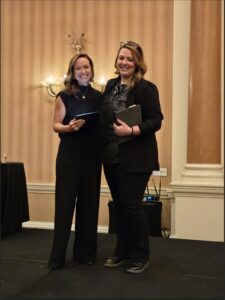
There is always a moment at a conference when the ideas feel fresh, the momentum feels real, and saying yes to marketing seems easy. I felt that at this year’s CSC Annual Conference, when I presented Marketing that Works: A Guide with Real Strategies for Independent Laundries alongside Kelly Brookins of Virginia Linen Services. But the real challenge is not getting excited about marketing in the room. The real challenge is sustaining it once you get back to the daily demands of the business.
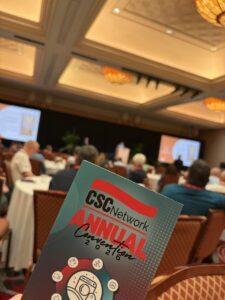
“Start with small doable marketing tasks that compound over time.” That was one of the biggest messages Kelly and I wanted people to leave with, because I have personally lived through what can happen when you do. I know what it feels like to be early in your career, trying to figure it out as you go, learning the industry while also trying to build something meaningful.
That is one reason why this topic matters so much to me. When I first started at CITY, I was an intern. As a 22-year-old, I did not know anyone in the industry, as I had just learned this industry existed.
A lot of what I learned came through trial and error, figuring things out the long way, talking with senior leadership at CITY, and slowly building confidence through consistency. That experience shaped how I think about marketing now.
I often believe marketing tasks can become overwhelming, which causes them to get pushed to the back burner. All of this can be resolved when there are clear, easy next steps that keep the momentum moving forward.
That was the heart of our presentation. Kelly and I wanted to show independent laundry owners, senior leaders, and sales and marketing teams that marketing does not have to feel so intimidating. When you approach it with a crawl, walk, run mindset, it becomes more manageable. You do the small things first. You build momentum. You let that work compound over time instead of getting stuck because the full picture feels too big.
One of the strongest audience connections came when we got practical. We shared tangible next steps, and I could see people taking pictures of the presentation slides at the conference because they wanted something they could bring back and actually use. We also asked an interactive question about people’s biggest marketing struggles, and the responses were honest. That was powerful. It reminded everyone in the room that even companies that seem polished from the outside still have gaps, questions, and opportunities to improve. Then the Q&A at the end turned into an engaging dialogue, and that energy confirmed for me that this is a conversation our industry wants and needs to keep having.
What I wanted people to realize by the end of the session is that marketing only works long term when there is real commitment behind it. That commitment has to start at the top. If leadership treats marketing like a box to check, it will never become a strategic advantage. If a president, CEO, or senior leader does not believe in what long-term marketing can do for growth, then the effort is dead on arrival. You may still do surface-level activity, but you will not build something sustainable.
The second part of that truth is ownership. In my opinion, someone inside the company has to be obsessively working on the marketing initiatives. That does not always mean a large in-house department. It can mean one dedicated person who keeps the voice, momentum, and priorities moving forward. Without that internal ownership, marketing usually gets pushed aside or becomes a mediocre brand that looks like everyone else. In our industry, there is always something urgent. Deliveries need to go out. Bills need to get paid. Equipment breaks. Service issues come up. Safety concerns happen. Marketing becomes the thing people say they will get to later. And later can quietly become years.
 That is where so many teams get it wrong after they say yes to marketing. They leave a conference inspired. They take notes. They come back with good intentions. Then they hand the idea off to someone who was not in the room, who did not feel the same urgency, and who may not have the time or authority to lead it. Or they send everything to an outside marketing company without anyone internally driving the communication, the feedback, and the long-term vision. Excitement without ownership is not a strategy.
That is exactly why Kelly and I created the crawl, walk, run marketing checklist booklet as a leave-behind resource. We wanted people to have something practical they could use right away. The goal was simple: make it easier to start. The crawl section focuses on low-hanging fruit tasks that can often be done in 15 minutes. The walk section moves into projects that may take a day or two. The run section is where you begin building larger, more layered initiatives that take more planning and feedback. Instead of asking people to figure out everything at once, we wanted to give them a roadmap they could actually follow.
I also believe sustainable marketing has to reach beyond one department. If you are only doing marketing to say you are doing marketing, you are missing the bigger opportunity. Marketing should support how you attract new prospects. It should help retain current customers. It should help attract top talent, and it should improve internal communication and pride so current employees stay engaged. Those four buckets matter. When marketing strengthens all four, it starts becoming part of the business instead of an extra project sitting off to the side.
Another point I felt strongly about during the presentation was the balance between in-house and outsourced support. I do not think this is a one-size-fits-all decision. Early on, I did not know how to build websites or run digital ads, so some things needed to be outsourced. But even then, I was constantly trying to learn and bring more understanding in-house. That matters. Even when outside partners help execute, someone internally still has to drive the brand, the priorities, and the message. Otherwise, marketing becomes disconnected from the real heartbeat of the company.
And that heartbeat is people. One of the biggest missed opportunities in laundry marketing is not using the faces of your company. People do not build trust with logos or generic stock images. They build trust with real people. They want to see the route service reps, the employees, the team members who show up every day and represent your brand in person. Some of the best marketing content is already inside your company. It is in the way your best people serve customers, solve problems, and care deeply about doing things right. Pulling those stories out and turning them into marketing messages is powerful because it is real.
So what should you do after an event like CSC, when the ideas are fresh, and you want to keep the momentum going?
Start with the crawl.
Do the simple things first. Make sure email signatures are aligned. Make sure branding is consistent in the places people actually see it. Make sure the overlooked basics are handled. Then move into the walk stage and begin building stronger messaging, better content habits, and more intentional customer feedback systems. Then move into the run stage, where the strategy deepens, and the work becomes more integrated across the company.
The biggest takeaway I hope people remember is this: you do not need to do everything at once, but you do need to start, and you need a plan to keep going.
Marketing works when it is consistent.
Marketing works when leadership believes in it.
Marketing works when someone owns it internally.
Marketing works when the small things are done often enough to create momentum.
That is the reminder I wanted this presentation to be, and it is the reminder I want this blog to be, too. It is easy to say yes to marketing in the moment. The harder and more important question is what happens next.
For independent laundries that want to grow, stay relevant, and build a brand that lasts, this is what happens next: you start with small, doable marketing tasks, and you keep going long enough for them to compound.
Subscribe to the C&SN Newsletter and get the “Marketing that Works” Playbook next week!
Comments
Comments are closed.